Sleep deprivation has reached crisis levels in America. Approximately 70 million adults struggle with sleep disorders, while 30-40% experience insomnia symptoms annually. Eight in ten adults worldwide want to improve their sleep quality, yet only 40% seek professional help. The consequences extend far beyond feeling tired—chronic sleep issues increase risks of diabetes, hypertension, heart disease, stroke, and obesity by significant margins.
Traditional sleep medications come with concerning side effects: next-day grogginess, dependency risks, and diminished effectiveness over time. Meanwhile, popular natural remedies like melatonin work for only 5-10% of users, often leaving people frustrated and still searching for relief.
Enter cannabinoids—specifically THCa and CBD—natural compounds showing remarkable promise for sleep support without the downsides of conventional sleep aids. Groundbreaking 2024 research provides the first objective evidence that certain cannabinoids can fundamentally improve sleep architecture, helping you not just fall asleep faster, but experience deeper, more restorative rest throughout the night.
This comprehensive guide explores how THCa and CBD work for sleep, examines the latest scientific research, and provides practical guidance for using these natural compounds to reclaim your nights and transform your days.
🌙 Ready for Better Sleep Tonight?
Explore Pure Shaka’s sleep-focused cannabinoid products backed by science
The Sleep Crisis: Why America Can’t Rest
Before exploring cannabinoid solutions, understanding the scope of sleep problems helps contextualize why so many are turning to alternative remedies.
Alarming Sleep Statistics for 2025
The numbers paint a concerning picture:
- 70 million Americans have chronic sleep disorders
- 67.7% of older adults report sleep difficulties
- 44% of adults globally say their sleep quality has worsened over the past five years
- 50-70% of insomnia cases stem from anxiety, depression, or psychological stress
- 35.4% of adults use some form of sleep product regularly
- 40% of Americans get less than the recommended amount of sleep
The economic impact is equally staggering. Sleep deprivation costs the U.S. approximately $411 billion annually in lost productivity, while inadequate sleep increases workplace accidents and medical errors dramatically.
Why Traditional Sleep Aids Fall Short
The most commonly used sleep solutions come with significant limitations:
Prescription Medications:
- Create dependency risks with regular use
- Produce next-day grogginess and cognitive impairment
- Associated with increased mortality rates in frequent users
- May increase cancer risk according to recent studies
- Lose effectiveness over time, requiring higher doses
Melatonin:
- Works for only 5-10% of users
- Can cause drowsiness and fogginess the following day
- Doesn’t address underlying sleep architecture issues
- Effectiveness varies wildly between individuals
OTC Sleep Aids (Antihistamines):
- Cause significant daytime drowsiness
- Build tolerance quickly
- Produce cognitive dulling effects
- Not suitable for long-term use
This landscape of inadequate solutions has driven millions toward plant-based alternatives—particularly those involving cannabinoids, which show remarkable promise in clinical research.
Understanding CBN: The “Sleepy Cannabinoid”
While CBD and THC dominate cannabinoid discussions, CBN (cannabinol) has emerged as the star player for sleep support. Recent groundbreaking research provides the first objective evidence of CBN’s profound sleep benefits.
What Is CBN?
CBN is a minor cannabinoid formed when THC oxidizes over time through exposure to air, heat, and light. This is why aged cannabis has historically been associated with stronger sedative effects—higher CBN content develops naturally as the plant ages.
Unlike THC, CBN produces minimal psychoactive effects while offering powerful sleep-promoting properties. It’s often called the “sleepy cannabinoid” for good reason.
Groundbreaking 2024 Research on CBN and Sleep
Two landmark studies published in 2024 revolutionized our understanding of CBN’s sleep benefits:
University of Sydney Study (November 2024)
Published in Neuropsychopharmacology, this study used polysomnography (the gold standard for sleep measurement) to objectively analyze CBN’s effects on rats. The findings were remarkable:
- CBN increased total sleep time significantly
- Both NREM and REM sleep increased, promoting complete sleep cycles
- Effects comparable to zolpidem (Ambien), a common prescription sleep aid
- Unlike zolpidem, CBN increased REM sleep, which is critical for emotional processing and memory consolidation
- An active metabolite (11-hydroxy-CBN) showed even stronger effects than CBN itself
Professor Jonathon Arnold, lead researcher, stated: “This provides the first evidence that CBN indeed increases sleep using objective sleep measures. It was a surprise that CBN metabolism in the body can yield a much greater effect on cannabinoid CB1 receptors than the parent molecule CBN.”
Clinical Trial (Published June 2024)
A double-blind, randomized, placebo-controlled study examined 321 participants who rated their sleep quality as “poor” or “very poor.” Subjects consumed either 20mg CBN, CBN+CBD combinations, or a placebo for seven consecutive nights.
Key findings:
- 20mg CBN significantly reduced nighttime awakenings compared to placebo
- Overall sleep disturbance decreased in the CBN group
- No impact on daytime fatigue, unlike many sleep medications
- Adding CBD did not enhance CBN’s effects—CBN alone was most effective
- Minimal side effects reported (mild headaches in some participants)
The researchers concluded: “The present study provides evidence to support the use of 20mg CBN alone for the improvement of some sleep difficulties, including nighttime awakenings and overall sleep disturbance.”
How CBN Promotes Sleep
CBN works through multiple mechanisms:
- CB1 Receptor Activation: Binds to cannabinoid receptors in the brain involved in regulating sleep-wake cycles
- Sedative Properties: Creates a calming effect that promotes relaxation without heavy intoxication
- Metabolite Activity: Converts to 11-hydroxy-CBN in the liver, which may produce even stronger sleep-promoting effects
- Sleep Architecture Enhancement: Improves both deep NREM sleep (physical recovery) and REM sleep (memory consolidation and emotional processing)
💤 Pure Shaka’s CBN-Enhanced Sleep Formulas
Our Slumber Chews combine CBD, CBN, and complementary cannabinoids for comprehensive sleep support. Each gummy is precisely dosed and lab-tested for consistent results night after night.
CBD for Sleep: Calming the Mind and Body
While CBN targets sleep architecture directly, CBD addresses many underlying causes of sleep disturbances—particularly anxiety and pain that keep you awake.
CBD’s Sleep-Supporting Mechanisms
CBD doesn’t sedate you like traditional sleep aids. Instead, it creates conditions conducive to natural sleep by:
- Anxiety Reduction CBD interacts with serotonin receptors (5-HT1A) to reduce anxiety—one of the primary causes of insomnia. By calming racing thoughts and worry, CBD helps your mind settle into rest mode.
- Pain Management Chronic pain disrupts sleep for millions. CBD’s anti-inflammatory and pain-relieving properties help reduce discomfort that prevents or interrupts sleep.
- Stress Response Regulation CBD modulates the endocannabinoid system (ECS), which plays crucial roles in regulating stress responses and maintaining homeostasis. A balanced ECS supports healthy sleep-wake cycles.
- Circadian Rhythm Support Some research suggests CBD may help regulate circadian rhythms, the internal biological clock governing when we feel alert or sleepy.
What The Research Shows
A 2024 comparative study examining 1,793 adults with sleep disturbance found:
- 56-75% of participants experienced clinically significant sleep improvements with CBD
- 15mg CBD isolate showed measurable benefits for sleep quality
- CBD was well-tolerated with only 12% reporting side effects (none severe)
- Effects were comparable to 5mg melatonin but with different mechanisms
Importantly, CBD’s sleep benefits often improve over time with consistent use, unlike sleeping pills that may lose effectiveness. The compound helps address root causes rather than simply masking symptoms.
CBD vs CBN: Which Is Better for Sleep?
The answer depends on your specific sleep challenges:
Choose CBN-focused products if you:
- Have trouble staying asleep (frequent nighttime awakenings)
- Want direct sedative effects
- Need deep, restorative sleep
- Don’t have significant anxiety issues
Choose CBD-focused products if you:
- Struggle falling asleep due to racing thoughts
- Experience anxiety-driven insomnia
- Have pain that interrupts sleep
- Want to address underlying stress issues
Choose Combined CBD+CBN formulas if you:
- Experience both falling-asleep and staying-asleep issues
- Want comprehensive sleep support
- Seek synergistic benefits from multiple cannabinoids
- Need both mental calming and physical sedation
🧪 Third-Party Lab Tested for Your Safety
Every Pure Shaka sleep product undergoes rigorous testing for potency, purity, and safety
THCa for Sleep: The Hemp-Derived Alternative
THCa (tetrahydrocannabinolic acid) offers unique benefits for sleep, particularly when you want the relaxation effects of cannabis without purchasing from dispensaries.
What Makes THCa Different?
THCa is the raw, non-psychoactive precursor to Delta-9 THC found naturally in fresh cannabis plants. In its raw form, THCa provides:
- Non-intoxicating benefits, including anti-inflammatory and neuroprotective properties
- Legal availability under the 2018 Farm Bill (hemp-derived with <0.3% Delta-9 THC)
- Conversion to THC when heated, providing traditional cannabis effects through smoking or vaping
This unique characteristic makes THCa products versatile—you can consume them raw for non-psychoactive benefits or heat them for full cannabis effects.
THCa’s Sleep Benefits
When consumed without heating (raw), THCa may support sleep through:
- Anti-inflammatory effects that reduce pain and discomfort
- Neuroprotective properties supporting brain health and function
- Stress reduction through endocannabinoid system interaction
- Gentle calming effects without heavy sedation
When heated (decarboxylated), THCa converts to Delta-9 THC, providing:
- Direct sedative properties that promote drowsiness
- REM cycle regulation supporting complete sleep architecture
- Physical relaxation that eases tension and discomfort
- Mental calming that quiets racing thoughts
Best THCa Strains for Sleep
Not all THCa flower is created equal for sleep. Indica-dominant strains typically work best due to their sedative terpene profiles:
Top Sleep-Inducing Strains:
- Northern Lights: Classic indica known for calming effects and sleep promotion
- Granddaddy Purple: Strong sedative properties with body-relaxing effects
- Bubba Kush: Heavy, tranquilizing effects ideal for nighttime use
- Hindu Kush: Pure indica genetics providing strong sedation
- 9 LB Hammer: Renowned for heavy sedation and potent sleep induction
Look for strains high in the following terpenes:
- Myrcene: Sedative and muscle-relaxing properties
- Linalool: Calming effects similar to lavender
- Beta-caryophyllene: Stress-reducing and anti-inflammatory
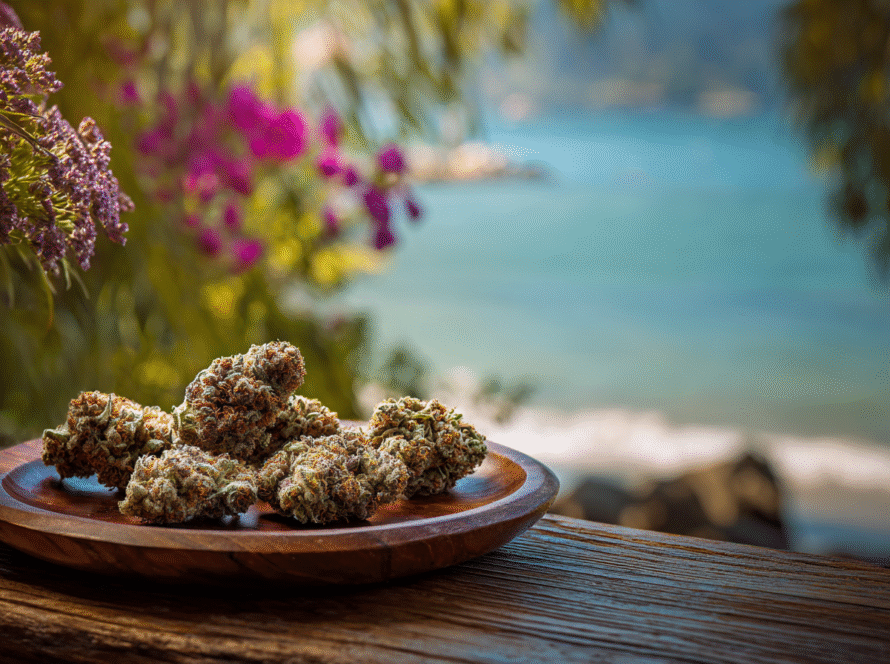
Pure Shaka’s THCa flower collection includes carefully selected strains optimized for relaxation and sleep support, available in Signature, Supreme, and Smalls varieties.
Using THCa for Sleep: Practical Guidelines
Timing:
- Consume 30-60 minutes before desired bedtime
- Allow time for effects to develop fully
Dosage:
- Start with 5-10mg equivalent (for heated consumption)
- Increase gradually until you find your optimal dose
- Higher doses don’t always mean better sleep—find your sweet spot
Consumption Methods:
- Smoking/Vaping: Immediate effects, shorter duration (3-4 hours)
- Edibles: Delayed onset (45-90 minutes), longer duration (6-8 hours)
- Tinctures: Moderate onset (15-45 minutes), moderate duration (4-6 hours)
For sleep specifically, many users find edibles or tinctures work best due to their sustained effects throughout the night. Pre-rolls offer convenience for those preferring inhalation methods.
⚡ Important: THCa Legal Status
THCa products from hemp (containing <0.3% Delta-9 THC) are federally legal under the 2018 Farm Bill. However, state regulations vary. Pure Shaka does not ship to Arkansas, Idaho, Minnesota, Oregon, and Rhode Island. Always verify your local laws before purchasing. When heated, THCa converts to Delta-9 THC and will produce psychoactive effects.
Creating the Perfect Sleep Routine with Cannabinoids
Cannabinoids work best as part of a comprehensive sleep hygiene strategy. Here’s how to maximize their effectiveness:
1. Establish Consistent Timing
Your body thrives on consistency. Take your cannabinoid sleep aid at the same time each evening—ideally 30-90 minutes before bed depending on the product type.
Timing Guidelines:
- Tinctures (sublingual): 30-45 minutes before bed
- Gummies/Edibles: 60-90 minutes before bed
- Smoking/Vaping: 15-30 minutes before bed
- Capsules: 45-60 minutes before bed
2. Optimize Your Sleep Environment
Create conditions that support cannabinoid effectiveness:
- Temperature: Keep bedroom cool (65-68°F ideal)
- Darkness: Use blackout curtains or eye masks
- Quiet: Consider white noise machines if needed
- Comfort: Invest in quality mattress and pillows
- Electronics: Remove or silence all devices
3. Combine with Proven Sleep Practices
Cannabinoids enhance—not replace—good sleep hygiene:
Evening Wind-Down Routine (1-2 hours before bed):
- Dim lights to encourage melatonin production
- Avoid screens (blue light disrupts circadian rhythm)
- Take a warm bath or shower
- Practice gentle stretching or yoga
- Read or listen to calming music
- Take your cannabinoid product at the appropriate time
What to Avoid:
- Heavy meals within 3 hours of bedtime
- Caffeine after 2 PM
- Alcohol (disrupts sleep architecture despite initial drowsiness)
- Intense exercise within 3 hours of sleep
- Stressful activities or conversations before bed
4. Track Your Results
Keep a sleep journal to identify patterns and optimize your approach:
What to Track:
- Cannabinoid product and dose taken
- Time taken
- Time to fall asleep (sleep latency)
- Number of nighttime awakenings
- Total sleep duration
- Sleep quality rating (1-10)
- Morning grogginess or alertness
- Daytime energy levels
After 2-3 weeks, patterns emerge that help you refine your optimal dose, timing, and product selection.
5. Consider Product Combinations
Many users find combining different cannabinoid products provides optimal results:
Popular Combinations:
- Full Spectrum CBD Tincture + CBN Gummy: Fast-acting anxiety relief with sustained sedation
- THCa Flower (indica) + CBD Tincture: Powerful sedation with reduced anxiety
- CBD:CBN Ratio Gummy + Melatonin: Comprehensive sleep support from multiple pathways
Pure Shaka’s product line is designed for flexible combinations. Our sleep-focused wellness products include formulations optimized for different sleep challenges.
🎯 Personalized Sleep Support
Not sure which cannabinoid products are right for your sleep issues? Our team can help.
Safety Considerations and Side Effects
While cannabinoids offer a natural approach to sleep support, responsible use requires understanding potential side effects and interactions.
Common Side Effects
Most people tolerate cannabinoids well, but some may experience:
CBD Side Effects:
- Dry mouth (most common)
- Drowsiness (can be beneficial for sleep but problematic if taken during day)
- Changes in appetite
- Diarrhea (at very high doses)
- Interactions with certain medications
CBN Side Effects:
- Mild headaches (reported in 5-10% of users)
- Next-day grogginess (much less common than with sleeping pills)
- Dry mouth
- Dizziness
THCa/THC Side Effects (when heated):
- Psychoactive effects (can include anxiety in some users)
- Increased heart rate
- Dry mouth and eyes
- Impaired coordination
- Memory effects
Who Should Exercise Caution
Consult a healthcare provider before using cannabinoid sleep aids if you:
- Are pregnant or breastfeeding
- Take medications metabolized by liver enzymes (CYP450)
- Have liver or kidney disease
- Have a history of substance abuse
- Take blood thinners or other prescription medications
- Have cardiovascular conditions
- Are under 21 years of age
Drug Testing Concerns
Full-spectrum CBD products contain trace THC (<0.3%) that can accumulate with regular use. While unlikely, it’s possible to test positive for THC metabolites with daily consumption of full-spectrum products.
Broad-spectrum or CBD-isolate products contain no detectable THC, minimizing (but not eliminating) drug test risks.
THCa products, when heated, convert to Delta-9 THC and will result in positive drug tests for THC metabolites.
If you undergo workplace drug testing, discuss your options with your employer and consider THC-free alternatives.
Starting Safely
Follow these principles for safe cannabinoid use:
- Start Low, Go Slow: Begin with the minimum effective dose
- One Change at a Time: Don’t combine multiple new products initially
- Give It Time: Allow 2-3 weeks to assess full effects
- Stay Hydrated: Drink plenty of water
- Avoid Alcohol: Don’t combine with other sedatives
- Store Safely: Keep all products away from children and pets
Key Advantages of Cannabinoids
Compared to Prescription Medications:
- No physical dependency
- Minimal next-day effects
- Improves natural sleep architecture rather than forcing sedation
- Generally safer side effect profile
- Can be used long-term
Compared to Melatonin:
- Higher effectiveness rates (56-75% vs 5-10%)
- Multiple mechanisms of action
- Addresses underlying causes (anxiety, pain) not just symptoms
- Less likely to cause next-day grogginess
Compared to Other Herbs:
- More robust scientific evidence
- Consistent, measurable effects
- Precise dosing available
- Works through well-understood biological pathways
🌿 Start Your Journey to Better Sleep
Experience the difference that research-backed, lab-tested cannabinoid products can make in your sleep quality. Pure Shaka’s sleep formulations combine optimal cannabinoid ratios with rigorous quality standards for consistent, reliable results.
The Future of Cannabinoid Sleep Research
The cannabinoid research landscape is evolving rapidly. Current and upcoming studies are exploring:
- Optimal cannabinoid ratios for different types of insomnia
- Long-term safety profiles with extended cannabinoid use
- Cannabinoid interactions with sleep medications
- Individual genetic factors affecting cannabinoid response
- Additional minor cannabinoids (CBG, CBC) for sleep support
- Terpene profiles enhancing sleep-specific effects
As legalization expands and regulatory restrictions ease, expect more robust clinical trials examining cannabinoids’ sleep applications. The preliminary evidence is compelling—cannabinoids may represent the most significant advancement in natural sleep aids in decades.
Take Control of Your Sleep Tonight
Sleep deprivation doesn’t have to be your reality. Cannabinoids offer a research-backed, natural approach to reclaiming restful nights without the risks of prescription medications or the ineffectiveness of many supplements.
Whether you choose CBD for anxiety-driven insomnia, CBN for staying asleep through the night, or THCa for powerful sedation, Pure Shaka provides the quality, testing, and transparency you deserve.
🌙 Experience Restful Sleep with Pure Shaka
Lab-Tested Quality • Expert Support • Science-Backed Formulas
Transform your nights with cannabinoid sleep products designed for real results
About Pure Shaka: Located at 2604 Kirkwood Hwy Suite C, Wilmington DE 19805, Pure Shaka provides premium hemp-derived cannabis products with rigorous lab testing and expert guidance. We’re committed to elevating wellness one stop at a time. Our sleep-focused formulations combine the latest cannabinoid research with uncompromising quality standards to help you reclaim restful nights. Call (888) 299-7525 for personalized sleep product recommendations or visit our FAQ page to learn more about cannabinoid sleep support.
Frequently Asked Questions
How long does it take for cannabinoids to improve sleep?
Some users notice improvements the first night, but optimal results typically develop over 1-3 weeks of consistent use. CBD in particular may require several nights to build up in your system and fully regulate your endocannabinoid system. CBN tends to work more quickly with noticeable effects within the first few uses.
Can I become dependent on CBD or CBN for sleep?
Unlike prescription sleep medications, CBD and CBN don’t create physical dependency. However, you may develop a psychological preference for using them. Most users can stop without withdrawal symptoms, though some report temporary sleep disruption as their body readjusts.
Will cannabinoids make me groggy the next day?
Most users report minimal to no next-day grogginess with CBD and CBN, especially at appropriate doses. This is a major advantage over prescription sleep medications and antihistamine-based OTC sleep aids. If you do experience morning grogginess, try reducing your dose or taking it earlier in the evening.
How do I know which dose is right for me?
Start with the low end of recommended ranges (15mg CBD, 10-20mg CBN) and increase gradually every 3-4 nights until you find your optimal dose. Your ideal dose depends on factors including body weight, metabolism, sleep issue severity, and individual endocannabinoid system sensitivity.
Can I combine cannabinoids with melatonin or other sleep supplements?
Many users successfully combine cannabinoids with other natural sleep aids like melatonin, magnesium, or L-theanine. However, start with cannabinoids alone for 1-2 weeks to establish a baseline before adding other supplements. Always consult a healthcare provider about potential interactions with prescription medications.
Is it better to use CBD, CBN, or THCa for sleep?
The answer depends on your specific sleep challenges. CBN is most effective for staying asleep and reducing nighttime awakenings. CBD excels at addressing anxiety-driven insomnia and helping you fall asleep initially. THCa (when heated) provides sedation but with psychoactive effects. Many users find combinations of CBD and CBN most effective. See our complete product guide to explore options.
How are Pure Shaka's sleep products different from others?
Pure Shaka products undergo rigorous third-party lab testing for potency, purity, and safety. We provide complete Certificates of Analysis (COAs) for transparency. Our sleep formulas combine research-backed cannabinoid ratios with complementary compounds for optimal effectiveness. Most importantly, we source only premium, organically grown hemp and maintain strict quality control throughout production.